Filtered.Mineralised.
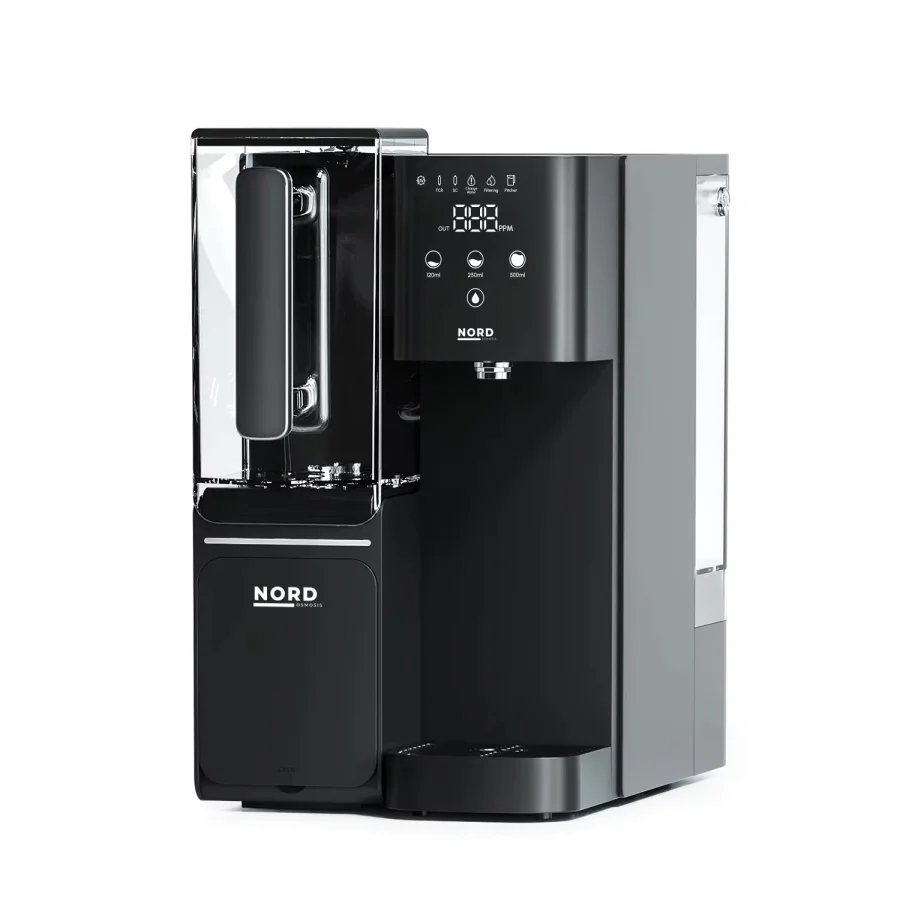
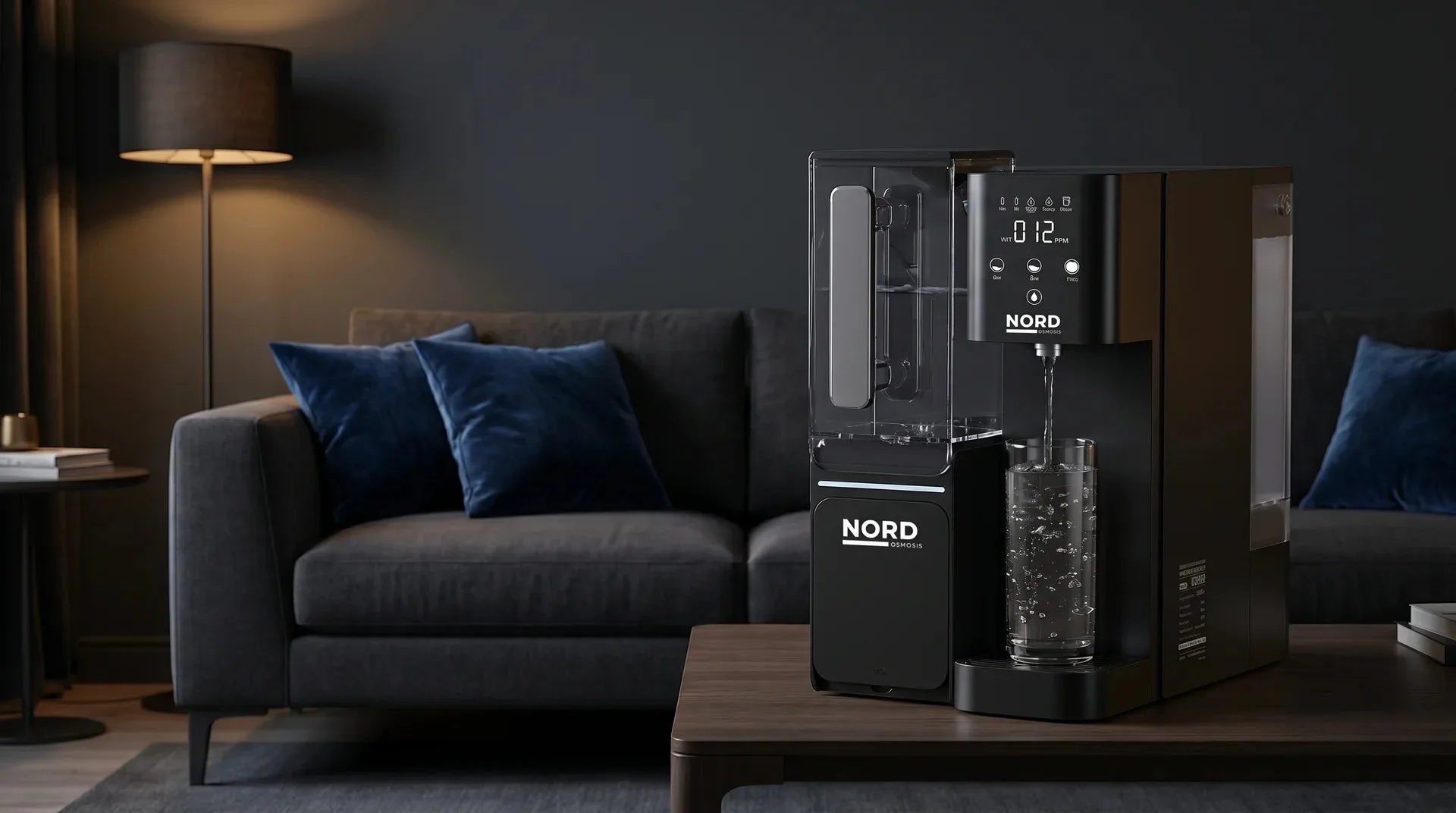
Countertop reverse osmosis that filters 1,000+ contaminants, then adds calcium, magnesium and potassium back. Built-in UV-C. No plumbing.
Lab tested.
None below 94%.
Lead, arsenic, PFAS and coliform bacteria, measured before and after filtration. Published in full, corrections included.
- Total Coliforms5.0×10⁵ → <1 CFU/100 mL>99.99%
- Arsenic0.2980 → <0.0002 mg/L>99.93%
- Lead0.1524 → 0.0003 mg/L99.80%
- Barium11.560 → 0.024 mg/L99.79%
- Chromium0.274 → <0.001 mg/L>99.63%
- Cadmium0.0512 → <0.0002 mg/L>99.60%
- PFOS (PFAS)0.001003 → <0.000004 mg/L>99.60%
- Chlorine2.04 → <0.01 mg/L>99.50%
- PFOA (PFAS)0.000734 → <0.000004 mg/L>99.45%
- Copper2.783 → 0.019 mg/L99.32%
- Perchlorate0.110 → <0.002 mg/L>98.18%
- Selenium0.121 → <0.001 mg/L>97.17%
- Nitrate26.537 → 0.825 mg/L96.89%
- Total Dissolved Solids833 → 27 mg/L96.76%
- Mercury0.0069 → 0.0003 mg/L95.65%†
- Fluoride8.793 → 0.459 mg/L94.78%†
All 16 results as a table
| Substance | Before | After | Unit | Reduction |
|---|---|---|---|---|
| Total Dissolved Solids | 833 | 27 | mg/L | 96.76% |
| Chlorine | 2.04 | <0.01 | mg/L | >99.50% |
| Nitrate | 26.537 | 0.825 | mg/L | 96.89% |
| Fluoride | 8.793 | 0.459 | mg/L | 94.78%† |
| Arsenic | 0.2980 | <0.0002 | mg/L | >99.93% |
| Cadmium | 0.0512 | <0.0002 | mg/L | >99.60% |
| Chromium | 0.274 | <0.001 | mg/L | >99.63% |
| Lead | 0.1524 | 0.0003 | mg/L | 99.80% |
| Mercury | 0.0069 | 0.0003 | mg/L | 95.65%† |
| Copper | 2.783 | 0.019 | mg/L | 99.32% |
| Barium | 11.560 | 0.024 | mg/L | 99.79% |
| Selenium | 0.121 | <0.001 | mg/L | >97.17% |
| PFOS (PFAS) | 0.001003 | <0.000004 | mg/L | >99.60% |
| PFOA (PFAS) | 0.000734 | <0.000004 | mg/L | >99.45% |
| Perchlorate | 0.110 | <0.002 | mg/L | >98.18% |
| Total Coliforms | 5.0×10⁵ | <1 | CFU/100 mL | >99.99% |
Source and how to read the results
Values from Nord Osmosis’s published product data. They are test values, not a guarantee for every source water or operating condition. The original laboratory report has not been independently checked here.
“1,000+ contaminants” describes the range of dissolved substances an RO membrane is built to reject by size. The 16 parameters above are the ones measured for Osmosis One.
“<” means below the stated measurement limit. “>” marks a minimum reduction: the true value is at least the bar drawn.
† Fluoride (94.78%) and mercury (95.65%) are calculated from the displayed concentrations as (before minus after) ÷ before × 100. Their previously published percentages, 97.79% and 99.80%, did not match those concentrations. All other reductions are reproduced as published.
NSF/ANSI 58
You check what is in your water. Ever checked what is in your filter?
Plastics, adhesives, manufacturing residues: anything that sits in water can release something into it, and a filter is no exception. Our RO membrane, the one part every drop passes through, was tested by NSF for exactly that. It met their health-based limits.
- Lab testedNSF’s lab checks what the membrane could release into your water and holds it to health-based limits. It passed.
- Not our wordNSF is an independent non-profit, setting public-health standards since 1944.
- On the recordThe membrane maker is on NSF’s public registry. Look it up yourself.
Scope: material requirements of the Vontron RO membrane component (NSF/ANSI 58). The maker also holds NSF/ANSI/CAN 61 for drinking-water contact materials.
How Osmosis One works
Strip. Restore. Protect.
Strip.
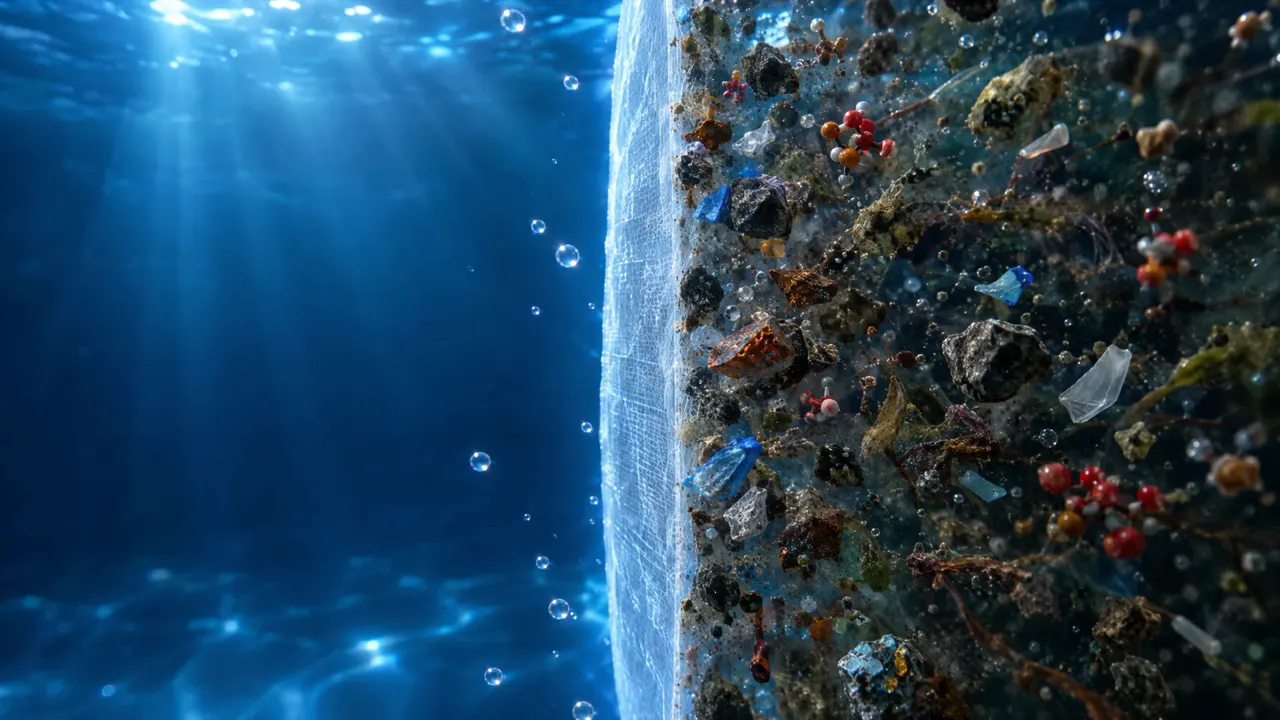
Cartridge 1, 2-in-1: RO membrane + carbon
The RO membrane separates water from dissolved substances, with carbon filtration in the same cartridge.
Restore.
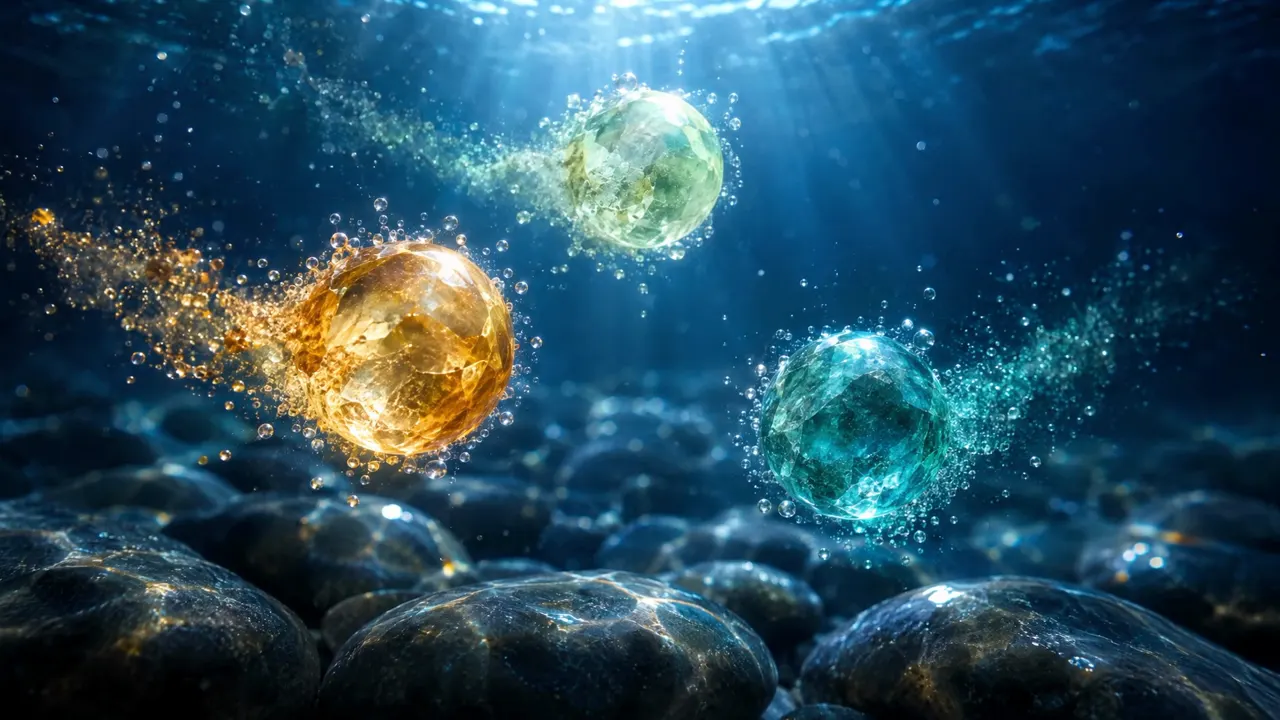
Cartridge 2, 2-in-1: minerals + post-carbon
Calcium, magnesium and potassium go back in, and a final carbon stage polishes the taste.
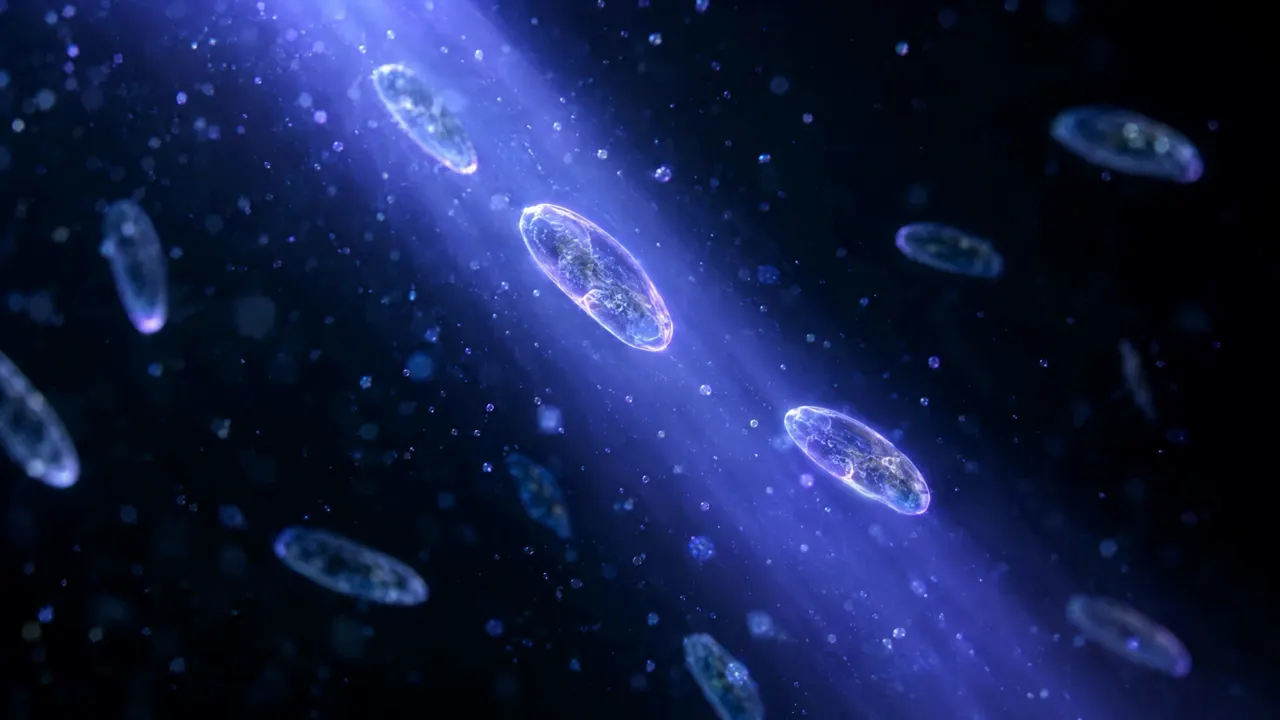
Protect.
UV-C, the last step
A second barrier after the membrane, for bacteria, viruses and parasites. UV-C treats the water with light.
Illustrations of the processes, not technical cross-sections. Water passes RO + carbon, then the mineral post-filter, then UV-C last. How each method works.
34/36tap water samples with TFA
PFAS in almost
every glass.
In 2024, independent testing of tap water in 11 EU countries found TFA, a short-chain forever chemical, in 34 of 36 samples. Half were above the EU’s 500 ng/l “PFAS Total” value if TFA is counted.
That is not a typo. 34 out of 36.
The EU only made PFAS a limit at the tap in January 2026. In Nord’s published test, PFOS and PFOA came out over 99.4% reduced. TFA was not part of that test.
Source: PAN Europe, 2024 (NGO testing). More in the science.
RO takes everything out.
We put the good back.
A reverse-osmosis membrane cannot tell a contaminant from a mineral.
So the calcium and magnesium go too. The last stage puts them back, with potassium, and lifts the pH. Not an upgrade. The other half of the system.
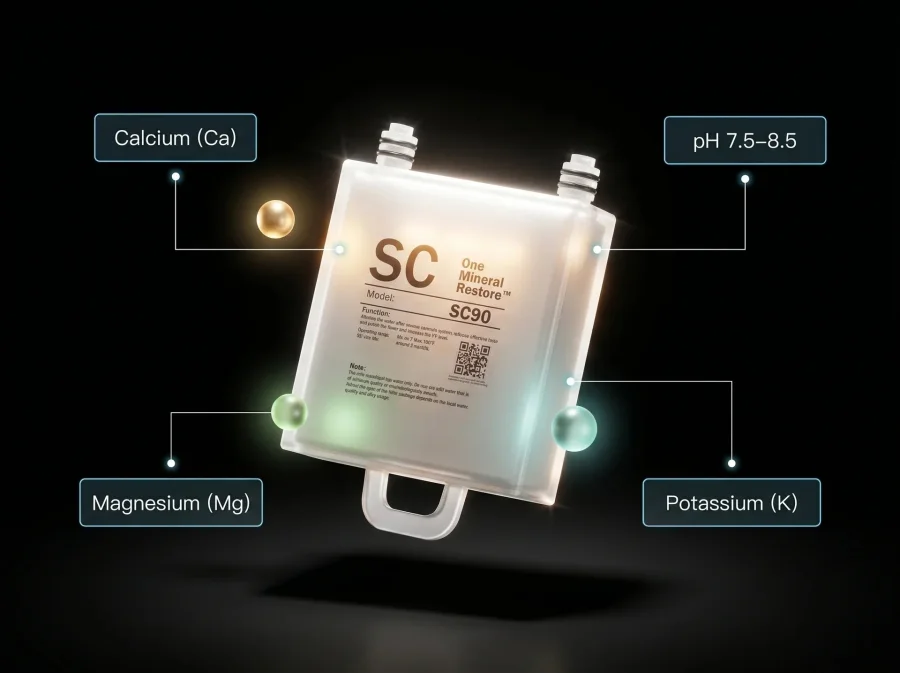
The natural three, restored at the final stage
Drawn live: each mineral as a dissolved ion in water. Tap a tile to stir.
pH after the mineral post-filter
7.5-8.5
Nord’s specification for One Mineral Restore. The exact mineral content and pH depend on your source water and filter age.
Why put them back.
RO removes almost everything, including the minerals. That changes the taste and the pH. One Mineral Restore adds calcium, magnesium and potassium back, bringing the water to pH 7.5 to 8.5.
Included, not an upgrade.
One Mineral Restore comes with every system. Pull it out and push in a new one about every 90 days. See the cartridge.
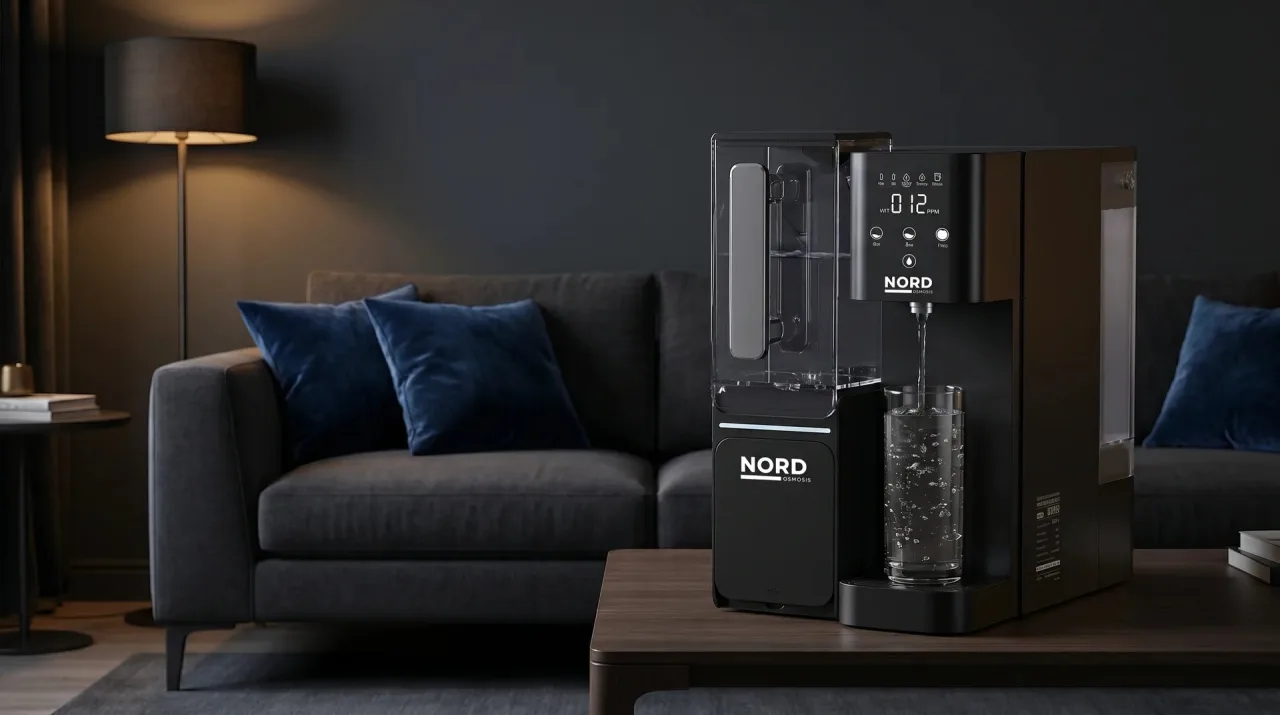
Nord Osmosis One vs. AquaTru Classic
Start with a proven formula.
Then finish it.
AquaTru Classic earned its place as the industry reference point. Osmosis One builds on the same idea, RO plus carbon on your counter, then adds a mineral post-filter and built-in UV-C as standard.
Full comparison and sources| Feature | NORDOsmosis One | AquaTru ClassicStandard filter |
|---|---|---|
| Mineral-adding post-filter | Included | Optional upgrade |
| Built-in UV-C treatment | Included | Not included |
| Filtered water : wastewater | 3.5 : 1 | 3 : 1 |
Published specifications for AquaTru Classic with its standard VOC filter, not a head-to-head test.
- Reference: AquaTru Classic with the standard VOC carbon filter; its mineral filter is an optional upgrade. Included features and published specifications, not laboratory filtration performance.
- Nord’s published feed tank is 4.5 L. AquaTru’s is 1 US gallon (3.785 L), per its support article. (4.5 ÷ 3.785 − 1) × 100 ≈ 19%.
- Nord’s published 3.5:1 ratio versus 3:1, calculated from AquaTru’s published 75% Classic efficiency. For the same filtered volume, (1 − 3 ÷ 3.5) × 100 ≈ 14% less concentrate. Separately published specifications, not a head-to-head test.
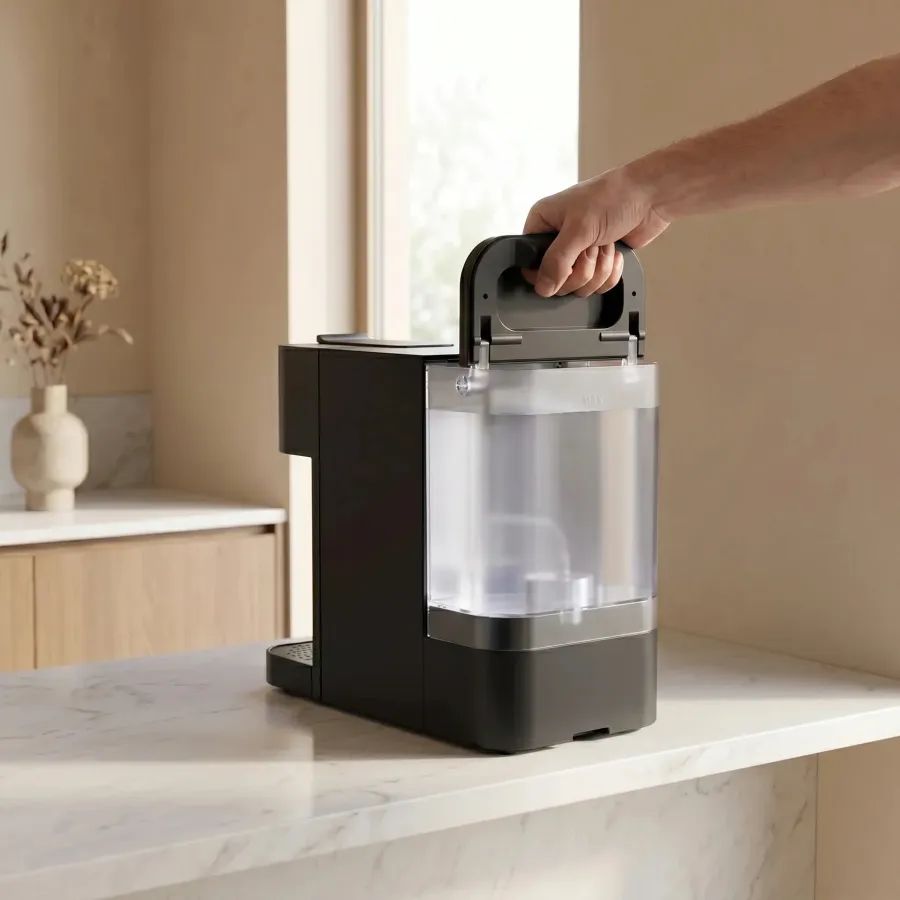
Pour. Return.
It refills.
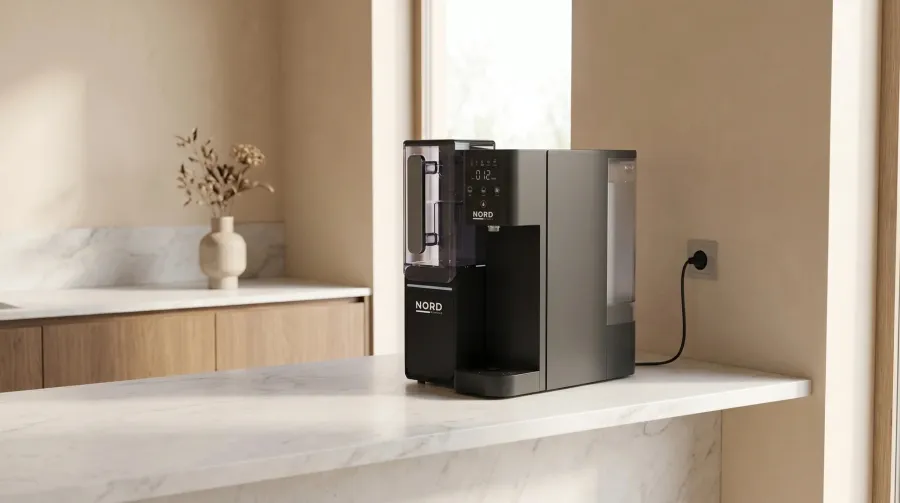
No installation. No plumber. No landlord call. Plug it in, fill the tank, pour. Set the pitcher back and it refills by itself.
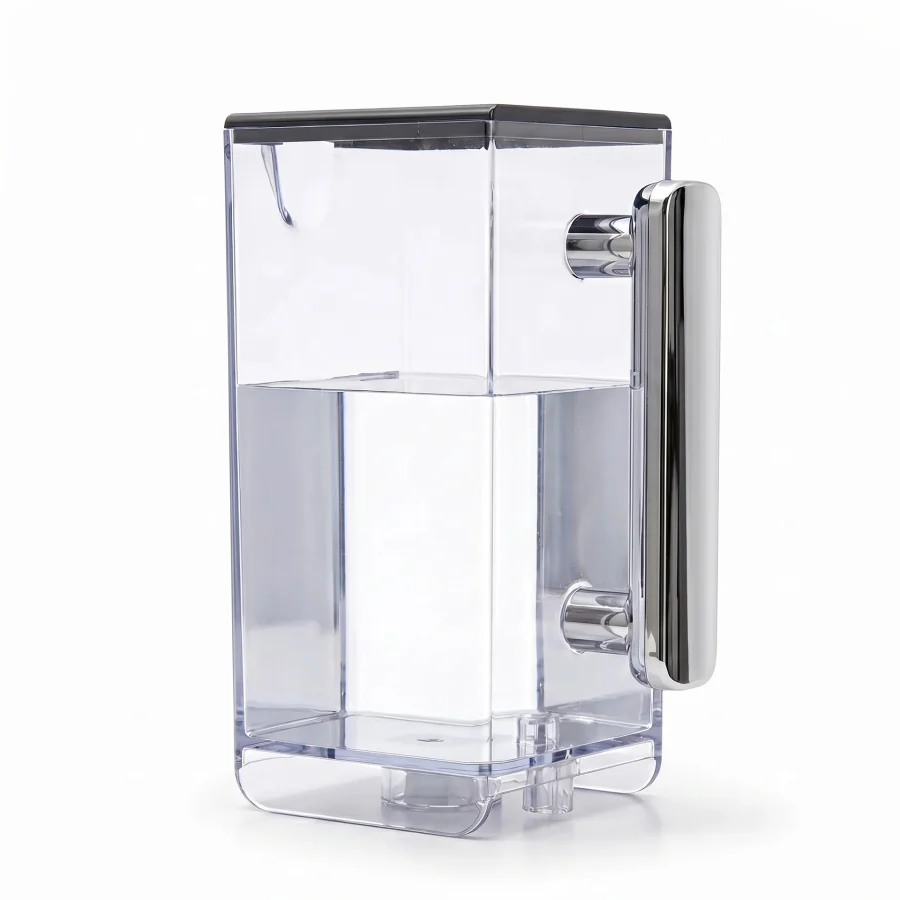
Fill the 4.5 L feed tank.
The removable rear tank holds tap water before filtration.
Serve from the pitcher.
Filtered water collects in a separate, removable pitcher. Take it to the table or chill it in the fridge.
A tank you can actually clean.
Sealed tanks are hard to reach inside. The 4.5 L feed tank lifts out, so you can wash it properly. Empty the remaining concentrate before refilling.
Two cartridges.
Both 2-in-1.
No tools to change either. The display tells you when: white when all is well, flashing red when a change is coming, solid red when it is time.
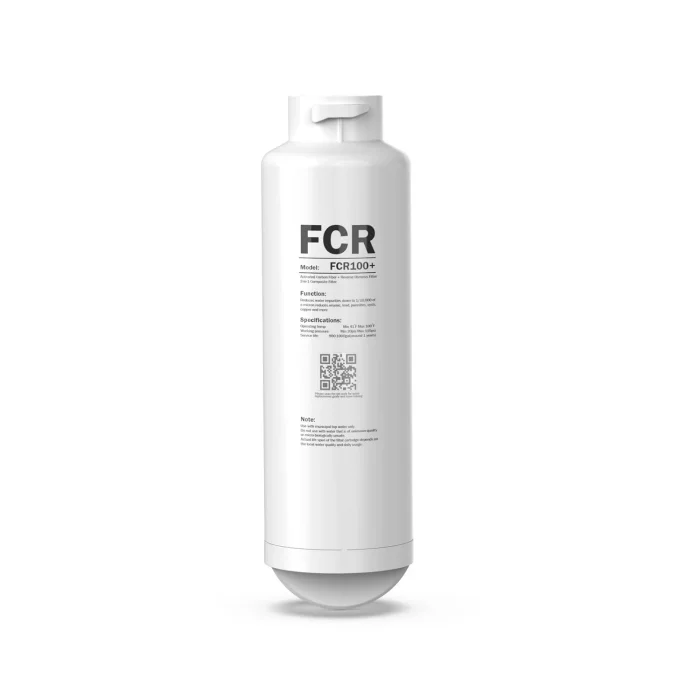
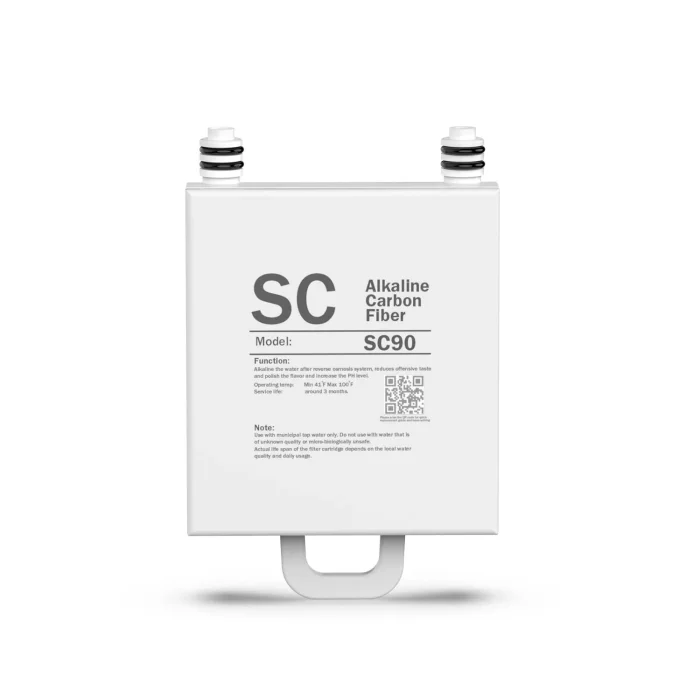
Filter life depends on your water and daily use. Flush new cartridges and reset the indicator as the manual describes. Looking for One Carbon Final? It is a carbon-only post-filter; check your cartridge reference before switching.
Gothenburg.
A team with long experience in water purification, making reverse osmosis that belongs on a kitchen counter. Every result published, so you can check our work. The same people behind Nord Hydrogen.